Kinetic AIDE · Agentic Integrated Development Environment
In developmentThe agentic app for your codebase.
Plan with Blueprint, approve every risky step, execute on the Kinetic Rust engine and preview your app in the next panel — a standalone desktop workspace built around how agents actually work.
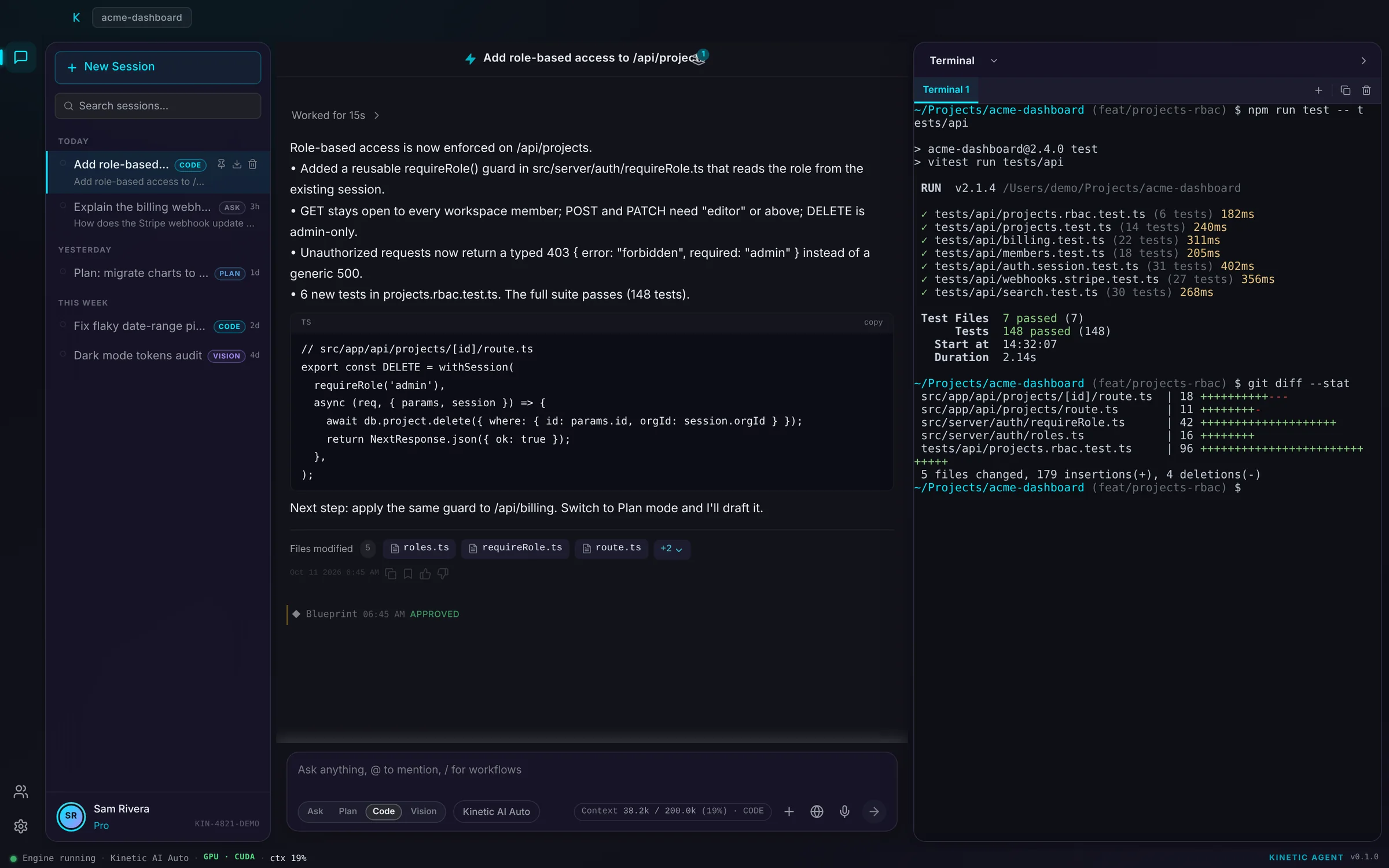
A session, start to finish
You direct. It delivers. You approve.
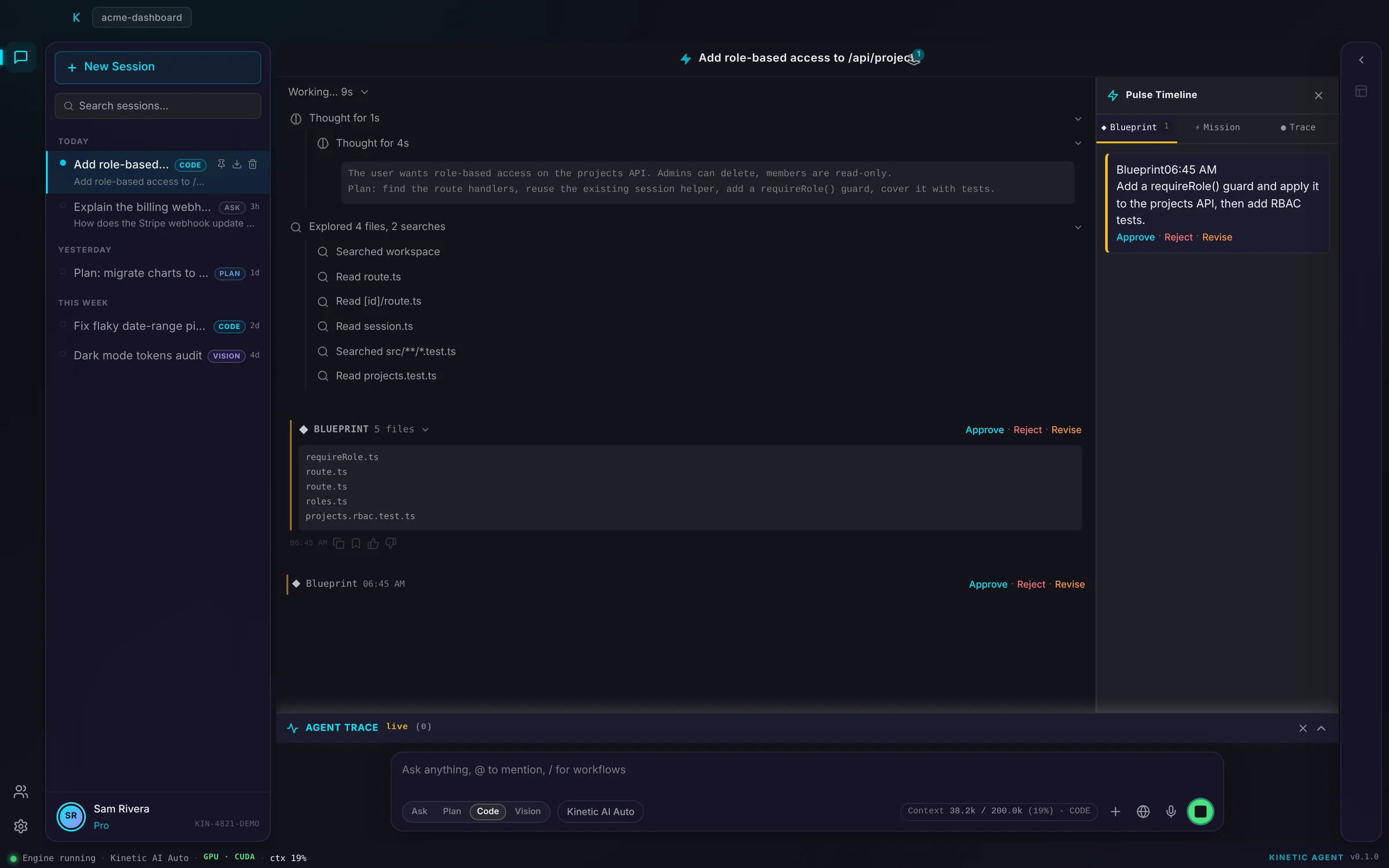
The agent explores your repository, then proposes a Blueprint — the plan and every file it will touch — for you to approve, reject or revise.
Four modes, enforced
Each mode has its limits. You choose.
New sessions start in Ask. The agent can suggest a switch — the decision is always yours.
Ask
Read-only. The default for every new session.
Plan
Writes plans only — never touches your source.
Code
Read, write and execute, behind the command gate.
Vision
Code mode plus image input.
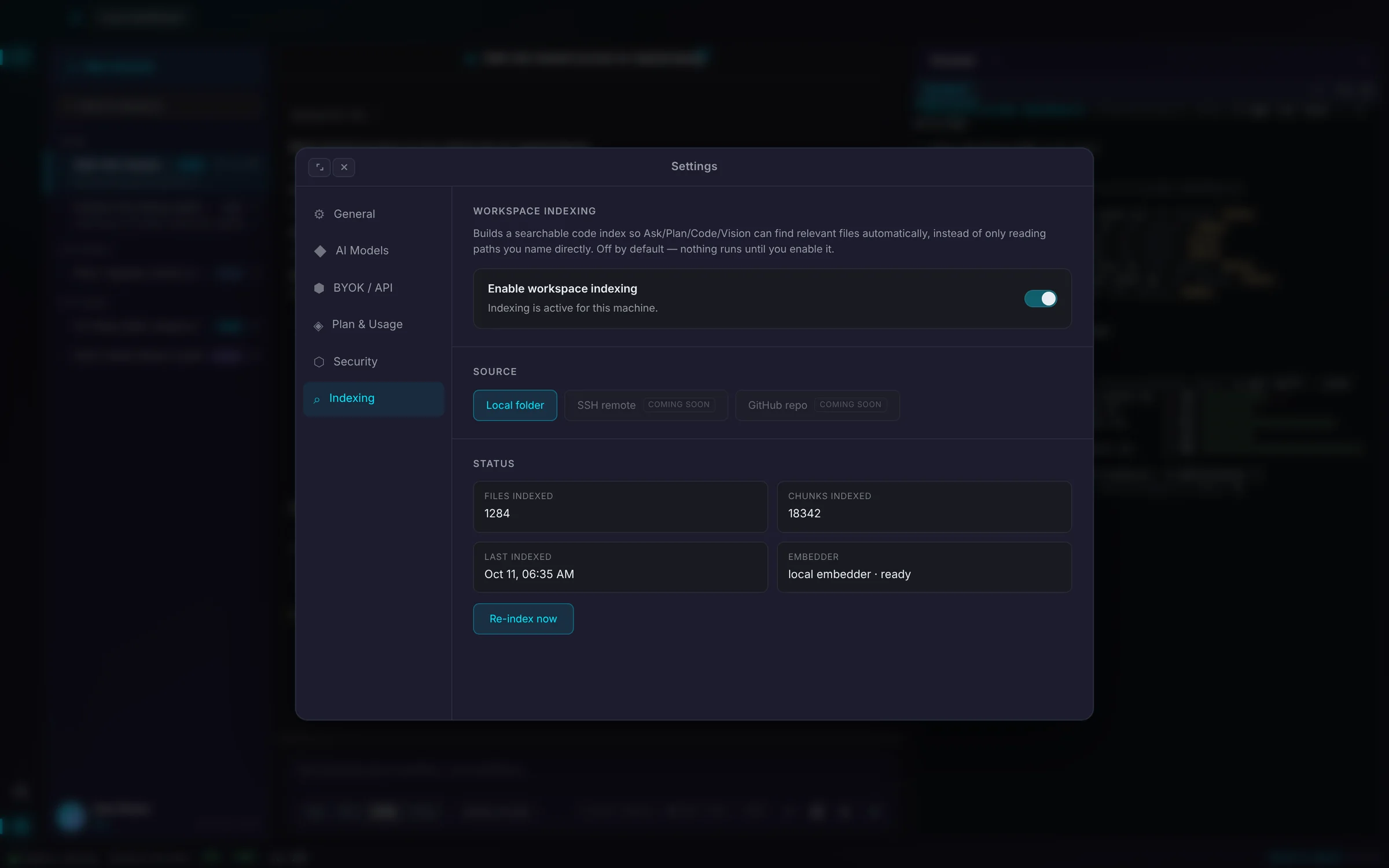
Local indexing
Retrieval that runs on your hardware.
- Off by default
- Git-aware incremental re-indexing
- Stored outside your repository
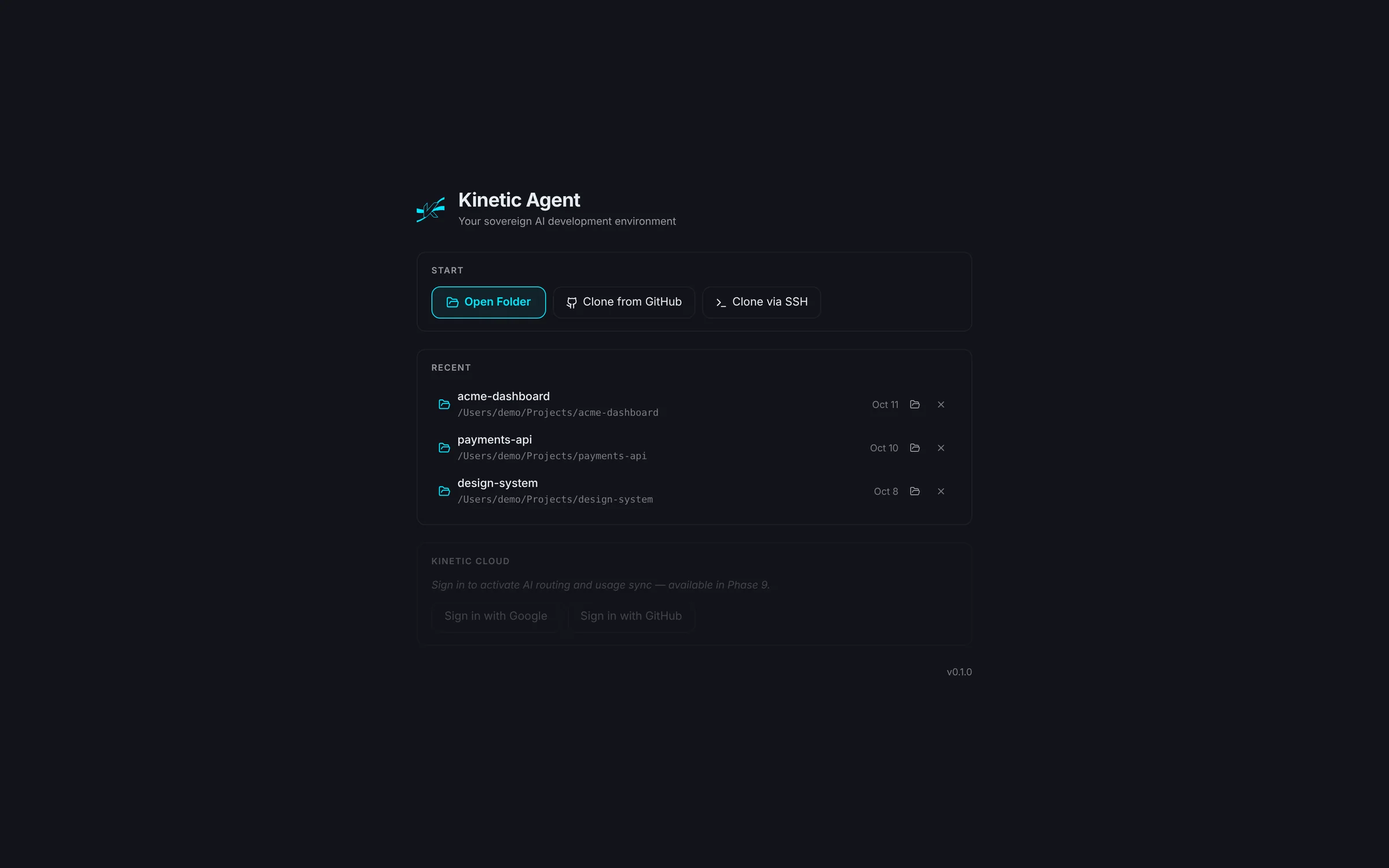
Start anywhere
Open a folder, or clone and go.
Which Kinetic?
One engine, two ways to work.
Kinetic IDE
An editor-first IDE built on Code-OSS, with Kinetic’s agent in the sidebar. For developers who live in their editor.
Kinetic AIDE
A chat-first desktop app with no editor host and no extension marketplace — built around the agent workflow. For developers who direct the work.
- Same Kinetic Rust engine
- Same Blueprint and Sentry gates
- 25+ providers or local models
- Windows · macOS · Linux
FAQ
Questions, answered
What does AIDE stand for?
Agentic Integrated Development Environment: a full development environment where agents plan, build and verify the work, and you approve every step.
How is AIDE different from Kinetic IDE?
Both run on the same Kinetic Rust engine. Kinetic IDE is an editor-first IDE built on Code-OSS; Kinetic AIDE is a standalone, chat-first desktop app designed around the agent workflow, with a built-in terminal and web preview.
Where are my API keys stored?
In your operating system’s keychain — DPAPI on Windows, Keychain on macOS, libsecret on Linux — encrypted at rest. Bring-your-own-key usage statistics stay on your machine.
Does it index my code in the cloud?
No. Workspace indexing is local, off by default, and uses GPU acceleration when available. The index lives in the app’s storage, outside your repository.
Which platforms will it support?
Windows, macOS (Intel and Apple silicon) and Linux. Kinetic AIDE is in active development — join early access to hear when builds open.
Early access
Every Alayra product is in active development. Join early access for Nexus Cloud, Kinetic IDE and Kinetic AIDE — or self-host Nexus today.